

Labor leader Dolores Huerta, co-founder of the United Farm Workers and civil rights advocate, has died.
What to Know
- Dolores Huerta died at age 96 on Wednesday at her Bakersfield home from cancer, according to family spokesman Erik Olvera.
- She co-founded the United Farm Workers in 1962 and served as its vice president for nearly four decades until Cesar Chavez’s death in 1993.
- In early 2026, Huerta revealed she was raped by Chavez in 1966 and kept the secret to avoid damaging the farmworker movement.
What happened
Dolores Huerta died on Wednesday at her home in Bakersfield, California. She was 96 years old. Her family confirmed the death to reporters shortly after it occurred.
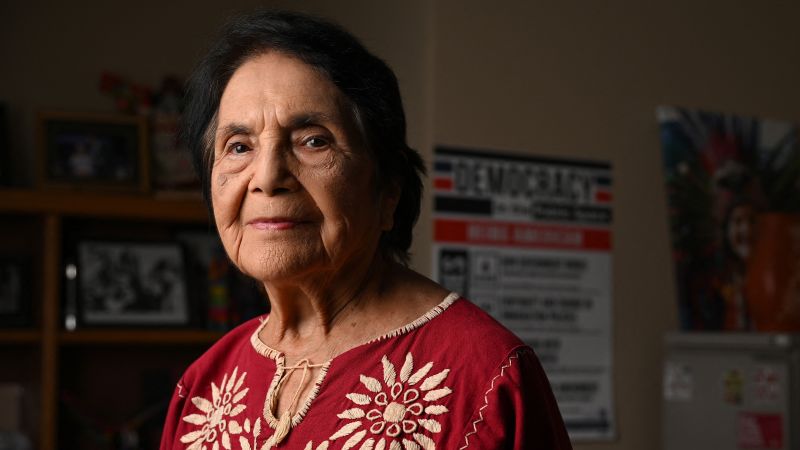
Throughout a career spanning decades, Huerta engaged in nonviolent civil disobedience that led to multiple arrests. Records indicate she was arrested at least 22 times for her participation in these activities, with some accounts suggesting the total number may have exceeded 25. During the height of the farm worker strikes, federal authorities placed both Huerta and Cesar Chavez under surveillance due to suspected Communist ties.
Her path to national prominence began when she co-founded the National Farm Workers Association with Chavez in 1962. The organization was established to improve social and economic conditions for agricultural laborers who faced low wages, long hours, and a lack of job security. Huerta dedicated her life to fighting discrimination and securing better working environments for these workers.
Her organizing prowess extended beyond the fields into the corridors of power and the hearts of the American public, culminating in a national boycott that became one of the most successful consumer actions in U.S. history. By 1968, Huerta was leading efforts in New York City to mobilize support for the grape strike, a campaign that eventually garnered backing from 17 million households and thousands of food stores, causing table-grape sales to plummet and forcing growers to capitulate by 1970. This success was built on her ability to translate local grievances into a national narrative, often utilizing the slogan “Sí se puede,” which she coined as the movement’s rallying cry. Her work earned her the Presidential Medal of Freedom in 2012 from President Barack Obama, America’s highest civilian honor, and recognition as one of the most famous Latinas in labor history.
Beyond her role with Cesar Chavez, Huerta was a mother of 14 children who frequently balanced the demands of activism with family life, often changing diapers between organizing meetings and nursing babies during negotiation breaks. Her children, many of whom lived with friends or supporters due to the instability of their parents’ work, grew up to become activists and professionals in diverse fields including law, medicine, performing arts, therapy, business administration, and culinary arts. Despite her public stature as a folk hero depicted in murals and ballads, Huerta revealed in early 2026 that Cesar Chavez had raped her during their time as union leaders, a secret she kept to avoid hurting the movement. She explained that she remained silent to avoid damaging the movement she had dedicated her life to building.
The physical toll of her activism was severe; Huerta was arrested at least 22 times, and possibly more than 25 times, for participating in nonviolent civil disobedience. During these protests, she was roughed up by strikebreakers and once severely beaten by a police officer, sustaining broken ribs and a ruptured spleen that left her disabled for months. Her commitment to the cause remained unshaken well into her later years; at age 89 in 2019, she was arrested again while joining a union protest advocating for better pay for home health care workers. Throughout her life, she championed not only farm worker rights but also immigrants’ and women’s rights, serving as an ally to progressive figures such as Governor Jerry Brown and Senator Robert F. Kennedy. Kennedy, whom she witnessed being murdered, and President Barack Obama.
What is known
Dolores Huerta, a pioneering labor organizer and civil rights icon who co-founded the United Farm Workers with Cesar Chavez in the 1960s, died at age 96. The cause of her death was cancer, according to family spokesman Erik Olvera. She passed away on Wednesday at her home in Bakersfield, California. (Dolores Huerta, pioneering labor leader and civil rights icon, dies at 96)

Huerta and Chavez fought for better pay and safer working conditions for agricultural laborers, work that continues to shape the industry today. Her activism extended beyond farm workers; she fought discrimination as part of her lifelong commitment to social justice. In recognition of her contributions, President Barack Obama awarded Huerta the Presidential Medal of Freedom in 2012.
Before co-founding the United Farm Workers with Cesar Chavez in 1962, Huerta served as a community organizer in Stockton, California, where her work as a teacher exposed her to the dire conditions of migrant families living in homes with dirt floors and children arriving at school barefoot. Her transition from education to activism led her to join a Latino civil rights group in Sacramento, where she lobbied for pensions for noncitizens and disability insurance for farm workers, laying the groundwork for the broader labor movement that would follow.
The strategic brilliance of Huerta’s leadership was evident during the 1965 Delano grape strike, which began with 1,200 members and evolved into a national boycott supported by 17 million households. While Chavez led the fasts on the ground in California, Huerta traveled to New York City to organize the produce boycott that became a cause célèbre, successfully pressuring thousands of food stores to drop table grapes until growers capitulated in 1970. Her role as vice president for nearly four decades included negotiating pathbreaking contracts and coordinating walkouts under the black Aztec eagle banner, often while managing the demands of raising 14 children who frequently lived with friends or supporters. (Dolores Huerta, Labor Leader and Force for Civil Rights, Has Died)
Huerta’s activism extended far beyond labor rights to encompass a lifelong fight against discrimination in voting, immigration, environmental justice, and LGBTQ+ equality. She was arrested more than 25 times for nonviolent civil disobedience, enduring severe physical violence including broken ribs and a ruptured spleen from police beatings, yet she remained a steadfast ally of figures like Senator Robert F. Kennedy and Governor Jerry Brown were allies of Dolores Huerta. Kennedy and Governor Jerry Brown. In recognition of her decades of service to marginalized communities, she became the first Latina inducted into the National Women’s Hall of Fame in 1993 before receiving the Presidential Medal of Freedom from President Barack Obama in 2012.
Huerta disclosed in early 2026 to The New York Times that she had been raped by Cesar Chavez in 1966 and sexually pressured by him in 1960, allegations supported by her account but not confirmed as fact in the provided sources. She explained that she kept these traumatic experiences secret for nearly 60 years because she feared no one would believe her due to police attitudes toward the movement, and because she did not want to hurt the cause of farmworkers’ rights. This disclosure came alongside evidence that Chavez had also groomed and molested underage girls as young as 12, a dark side of their partnership that Huerta had never publicly addressed until the investigation forced her hand.
The legacy of Huerta’s work continues to shape the agricultural industry today through the improved wages and safer working conditions secured by the United Farm Workers. Her famous slogan “Sí se puede,” which she coined, became the rallying cry for the movement and a symbol of empowerment for generations of activists fighting for social justice. Despite her towering status as a labor leader and civil rights icon, Huerta remained an unsung hero in many parts of the country until recent years, when her essential role in turning a rural movement into a national cause was finally fully recognized. (Dolores Huerta, farmworker and civil rights activist, dies at 96)
Key details and context
Dolores Huerta, the labor leader and civil rights advocate who co-founded the United Farm Workers with Cesar Chavez in 1962, died on Wednesday at her home in Bakersfield, California. She was 96 years old. Her family announced the death via a statement expressing deep sadness over the loss of their mother, according to CNN reporting on October 28, 2026.

While Huerta and Chavez established the National Farm Workers Association in 1962 as a forerunner to the United Farm Workers, her contributions to the farmworkers’ movement were long overshadowed by those of Chavez. Despite this historical imbalance, Huerta was recognized with significant honors during her lifetime, including becoming the first Latina inducted into the National Women’s Hall of Fame in 1993.
In addition to her work with the United Farm Workers, Huerta created an organization to further her cause and improve social conditions. Her career included decades of activism where she was arrested at least 22 times for participating in non-violent civil disobedience activities. She also championed immigrant rights, women’s rights, and environmental justice throughout her life.
Huerta’s legacy includes coining the slogan “Sí se puede,” which became a rallying cry for the movement. Her organizing efforts helped secure contracts that granted farm workers medical insurance, employer-paid pensions, and mechanisms to challenge abusive working conditions. These achievements were realized through strikes and boycotts that drew support from millions of households.
The announcement of her death marks the end of a life dedicated to improving working conditions for marginalized communities. Huerta’s work challenged abuses by powerful growers and helped transform a largely rural movement into one that captured the national imagination. Her passing concludes a chapter in American labor history defined by both triumphs and personal struggles.
Her organizational acumen extended beyond the grape fields into a broader coalition of progressive causes, where she served as a key ally to political figures including Governor Jerry Brown and Senator Robert F. Kennedy. Kennedy, and President Barack Obama. In 2012, President Obama honored her with the Presidential Medal of Freedom, recognizing her decades of service as America’s highest civilian award. Her influence reached into the nation’s capital, where she lobbied for legislation supporting pensions for noncitizens and disability insurance for farm workers during her time as a lobbyist in Sacramento.
The scope of her activism included witnessing the murder of Senator Robert F. Kennedy. Kennedy, an event that underscored the volatile political climate of the era she navigated. Despite facing surveillance by the FBI due to suspected Communist ties and enduring severe physical violence—including broken ribs and a ruptured spleen from a police beating—she maintained her commitment to nonviolent civil disobedience. Her resilience was further tested by personal sacrifices, as she often changed diapers between organizing meetings and nursed her babies during negotiations, with many of her 14 children living with friends or supporters while she pursued the movement.
The legacy of her leadership is also marked by the profound impact on her own family, most of whom grew up to become activists and professionals in fields ranging from law and medicine to performing arts and business administration. Her revelation in early 2026 regarding the sexual assault by Chavez, which she had kept secret for nearly six decades to protect the movement’s unity, added a complex layer to her public persona as a feminist icon who endured trauma while building an organization that secured medical insurance and pensions for thousands of workers.
The Agricultural Workers organization she established served as a critical vehicle to expand her reach beyond the United Farm Workers, allowing her to address social conditions with greater autonomy. This initiative reflected her determination to challenge abuses by powerful growers and transform a rural struggle into a national cause that captured the imagination of millions. Her work ensured that the movement’s victories were not limited to wages but included mechanisms to challenge abusive working conditions and secure employer-paid pensions for a demographic long marginalized in American labor history.
What the reporting and records show
Dolores Huerta served as vice president of the United Farm Workers for nearly four decades, acting as Cesar Chavez’s second-in-command until his death in 1993. Born Dolores Clara Fernandez on April 10, 1930, in Dawson, New Mexico, she later became a central figure in organizing migrant laborers and securing union contracts.
In early 2026, Huerta revealed to The New York Times that Chavez had raped her during their time as union leaders. She stated that she kept this secret for decades because she did not want to hurt the movement or expose its leader to public scrutiny. This disclosure followed a broader investigation into Chavez’s conduct regarding underage girls and women.
Huerta specifically alleged in 2026 that at the height of the UFW boycott, Chavez drove her to a secluded grape field in Delano, California, where he raped her. She also described an earlier incident in 1960 during which she said Chavez pressured her into having sex with him while on a work trip. Huerta explained that she did not report these attacks at the time due to police attitudes toward their movement and a fear that union members would not believe her.
The 1960 incident described by Huerta occurred while Chavez was still establishing the National Farm Workers Association, an organization that had not yet evolved into the United Farm Workers. At this early stage of their partnership, which began after they met at a 1955 fundraising dinner, Cesar Chavez held significant sway over Dolores Huerta’s professional trajectory as she transitioned from teaching to full-time community organizing in Sacramento. Huerta later recounted that during this work trip, Chavez utilized his position as a fellow organizer and emerging leader to pressure her into sexual compliance, an act she kept silent about for decades due to the precarious nature of their fledgling movement and the fear that such allegations would dismantle their efforts before they secured any tangible victories.
The 1966 allegation took place during the height of the Delano grape strike and the subsequent national boycott, a period when the union was mobilizing households across thousands of food stores to pressure California table-grape growers. Huerta alleged that Chavez drove her to a secluded grape field in Delano, California, where he raped her while the movement was under intense scrutiny from law enforcement and facing violent opposition from strikebreakers. The timing of this assault coincided with a critical phase where the union had declared a national boycott, and Huerta herself was actively organizing in New York City to sustain the campaign that would eventually lead growers to capitulate in 1970. Despite her role as vice president and second-in-command, she feared that reporting the attack would undermine the movement’s moral standing or result in disbelief from union members who viewed Chavez as a charismatic hero.
Huerta’s decision to remain silent regarding these assaults was rooted in a complex web of professional loyalty and fear of institutional failure. She described viewing Chavez not only as her boss but also as a hero capable of achieving the impossible, a sentiment that made the revelation of his abusive behavior particularly devastating for her personal narrative. The fear of police attitudes toward their movement further complicated any potential reporting, as law enforcement had already placed both leaders under surveillance for suspected Communist ties and often ignored harassment against strikers. Huerta explained that she believed union members would not believe her account, a concern compounded by the fact that Chavez was the face of the struggle for migrant laborers who toiled in backbreaking conditions with no job security.
The revelation of these events in early 2026 marked a significant shift in the historical understanding of the United Farm Workers’ leadership dynamics. Huerta stated that she kept this secret to avoid hurting the movement or exposing its leader to public scrutiny, a decision that aligned with her lifelong commitment to securing farmworker rights above personal grievances. This disclosure came as part of a broader investigation into Chavez’s conduct regarding underage girls and women, revealing a pattern of behavior that included grooming and molesting individuals as young as 12 years old. Huerta noted that she had not been aware of the allegations involving younger victims until the New York Times report, adding another layer to her own trauma and the complexity of her relationship with Chavez.
The impact of these revelations on the legacy of the United Farm Workers was profound, challenging the narrative of a purely heroic movement led by an infallible figure. Huerta’s account highlighted the dark side of her years alongside Chavez, contrasting sharply with her public image as a skilled organizer who coordinated walkouts and negotiated pathbreaking contracts under a black Aztec eagle banner. Despite the abuse she suffered, Huerta continued to champion immigrants’ and women’s rights, eventually receiving the Presidential Medal of Freedom in 2012 from President Barack Obama. Her willingness to speak out in 2026 demonstrated her enduring commitment to truth and justice, even as it forced a reevaluation of the movement’s history and the personal costs borne by its key figures.
What it means and what to watch
The 1966 revelation that Dolores Huerta was raped by Cesar Chavez, following a prior incident of coercion in 1960, recontextualizes the personal cost behind the movement’s public victories. Huerta explained she did not report these assaults due to hostile police attitudes toward farm workers and a fear that union members would not believe her. This disclosure, made during an interview with The New York Times earlier this year, adds a layer of trauma to the legacy of the leaders who organized the 1960s and ’70s strikes.
The physical toll Huerta endured while leading these campaigns remains documented in historical records from the era. During protests, she was severely beaten by a police officer, an assault that resulted in broken ribs and a ruptured spleen that left her disabled for months. These injuries occurred alongside 22 arrests for nonviolent civil disobedience, illustrating the dangers faced by organizers who practiced strategies modeled after Dr. Martin Luther King Jr.
Huerta’s personal history also includes early family challenges that shaped her resilience before she entered full-time organizing work. After her parents divorced, she and her siblings were raised by their mother, Alicia, a businesswoman and active member of the agricultural community in New Mexico. This background preceded Huerta’s decision to become a community organizer after witnessing farm workers’ children arrive at school barefoot and hungry.
The cultural impact of Huerta’s leadership is anchored in her creation of the slogan “Sí se puede,” which became a rallying cry for the farm worker movement. While Cesar Chavez often served as the charismatic face of the union, Huerta’s organizing skills were essential to winning collective bargaining rights and improving wages for some of the country’s most marginalized workers.
The 2017 documentary “Dolores” captured the era’s atmosphere, with Huerta recalling how an ambience of possibility surrounded them as they sought to change the world through protests, strikes, and grassroots campaigns. This period saw millions of Americans participating in boycotts of grapes and lettuce from the mid-1960s to the mid-1970s, a movement that improved lives for some of the country’s poorest workers despite Huerta’s role often being overlooked by history.
Huerta’s influence extended beyond California, as she brought the UFW’s message into major urban centers like Los Angeles and New York City. In 2019, at age 89, she was arrested while joining a union protest for better pay for home health care workers, demonstrating her continued commitment to labor justice decades after the farm worker movement’s peak. Her legacy includes being inducted as the first Latina into the National Women’s Hall of Fame in 1993 and receiving the Presidential Medal of Freedom from President Barack Obama in 2012.
The movement Huerta helped build faced significant opposition, including FBI surveillance for suspected Communist ties and harassment by strikebreakers. Despite these challenges, the union secured support from allies like Senator Robert F. Kennedy and Governor Jerry Brown of California. Kennedy, who attended a rally in Delano on March 10, 1968, and Governor Jerry Brown of California, who signed legislation Huerta sought. The success of their efforts was marked by the signing of contracts with growers in 1970, which granted first-time benefits to workers and swelled union membership to record highs.